
Mini Challenges: Calm Games
UltraPubCasual
4.9396.00 Reviews
- Version
- 1.0.41
- Installs
- 10.00M
- Age Rating
- Everyone
Screenshots




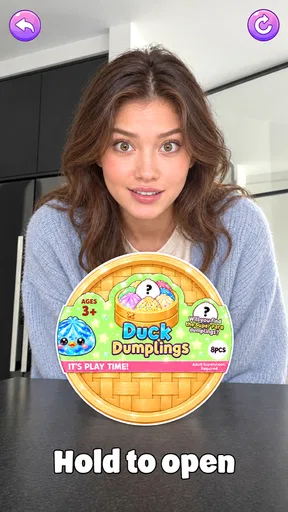

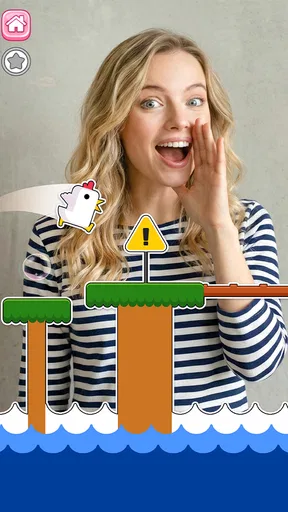

Our Review of Mini Challenges: Calm Games
 Analysis by Appyee
I approached Mini Challenges: Calm Games expecting a simple way to fill a few spare minutes, and that is exactly where it works best. This is a casual game from UltraPub built around a collection of small challenges rather than one long adventure, competitive campaign, or complicated progression system. My overall impression is positive: it is easy to open, easy to understand, and flexible enough for short breaks. Its biggest strength is convenience, while its main weakness is that players looking for depth may quickly feel that each activity is too brief or lightweight.
The game is free and aimed at Everyone, which makes its pick-up-and-play design especially accessible. It is also available on devices running Android 7.1 or later, so it does not demand a recent phone or tablet. The current version is 1.0.30, and the app has already passed the ten-million-install mark. That level of reach, together with an average score of 4.8 from roughly 106,000 ratings, suggests that its straightforward format connects with a broad audience. I would still treat popularity as a starting point rather than a guarantee, because the right choice depends heavily on whether you want quick variety or a deeper game.
Why the small-challenge format works
The most convincing part of the experience is the low commitment. I do not need to remember a story, learn a large control scheme, or prepare for a long session before getting something out of it. The collection format lets me approach the game with a very specific intention: play briefly, clear my head, and stop when I am ready. That makes it a useful companion for moments when a full game feels like too much work.
There is a subtle advantage in having several mini games under one roof. If one challenge does not suit my mood, I can move on without abandoning the entire app. A single-purpose puzzle game may offer a more polished central mechanic, but it can also become repetitive when that mechanic stops feeling fresh. Here, the variety gives the experience a little breathing room. I found that especially useful when I wanted something casual but did not know exactly what kind of activity I felt like playing.
The short-session design also makes the game suitable for interrupted play. A waiting room, a quiet coffee break, or a few minutes before bed can be enough time to enjoy it. I would not recommend starting it when I need to focus on work, since “just one more” small challenge can still become distracting, but it fits naturally into gaps that would otherwise be spent scrolling aimlessly.
One practical tip is to use the game as a deliberate break rather than an endless background activity. I get more value from choosing a small stopping point before I begin. Because the challenges are compact, it is easy to keep extending a session without noticing. Setting a personal limit helps preserve the calm, casual quality instead of turning the app into another source of constant stimulation.
A good choice for mixed moods
I liked that the collection does not force me into one emotional pace. Sometimes I want to think for a moment; at other times I want a quick distraction with no learning curve. A mini-game collection can accommodate both needs better than a single puzzle built around one repeated pattern. That flexibility is the reason I would recommend it to someone who often installs games, enjoys them briefly, and then loses interest once the central idea becomes familiar.
It is also approachable for people who do not normally consider themselves gamers. The casual category can sometimes include games with surprisingly demanding systems, but this title presents itself as a set of small challenges. That framing lowers the barrier to entry. I could hand it to a family member who does not want to study instructions for ten minutes before playing, and the format would make more sense than a large role-playing game or a strategy title with several menus.
The Everyone age rating reinforces that broad positioning. Parents may still want to look at the game themselves before handing over a device, as they should with any entertainment app, but the stated rating makes it a more natural candidate for shared household use than a game aimed at older players. It can work as a light, occasional activity rather than something that requires a dedicated gaming setup.
How it compares with familiar alternatives
Compared with a conventional single-puzzle app, Mini Challenges: Calm Games offers more variety but may provide less mastery. A focused puzzle title often gives players a clear skill curve: the rules are stable, the difficulty rises, and improvement becomes the main reward. This game is better when I want to switch activities quickly. It is not necessarily better for someone who enjoys studying one system and becoming exceptionally good at it.
Compared with an endless runner or a reflex-heavy arcade game, it feels less dependent on maintaining speed and momentum. That makes it more comfortable for relaxed play, especially when I am tired or using a smaller screen. The trade-off is that players who want constant action may find the collection too gentle. If your ideal mobile session involves chasing a high score through rapid movement, a dedicated arcade game will probably give you a stronger sense of intensity.
It also occupies a different space from large social or competitive games. There is no reason to choose it when your main goal is team coordination, live competition, or a long-term identity inside a virtual world. Its appeal is private, immediate, and uncomplicated. I see it as a pocket activity rather than a substitute for a main game.
That distinction matters when deciding whether the free price is genuinely valuable to you. Free access is convenient, but value is not only about cost. If you want a game that can occupy many evenings with a deep progression system, the collection may feel limited even though it costs nothing. If you want something you can open without planning, the same simplicity becomes its strongest advantage.
The limitations I noticed in the format
The main weakness is also the feature that defines the game: mini challenges are naturally smaller than full-length game modes. Variety can delay repetition, but it does not automatically create depth. After the initial curiosity fades, I can imagine some players wishing that one or two activities had more layers, more demanding goals, or a clearer reason to return beyond the next quick round.
This is not a criticism of the concept so much as a warning about expectations. The store summary describes a collection to play, and that is the correct way to approach it. I would not install it expecting a substantial campaign, a rich narrative, or the kind of long-term progression found in larger casual titles. Its design is better suited to immediate entertainment than to a multi-week personal challenge.
Another possible friction point is the lack of a single central identity. A focused game can build a memorable atmosphere around one mechanic, visual style, or objective. A collection has to divide attention among its activities. For me, that kept the experience flexible, but it also made it harder to form a strong attachment to any one part. Players who value a distinctive world or a carefully developed core mechanic may prefer a specialized alternative.
I also think the format requires a little self-management. Because the challenges are easy to start, the app can become a default response to every idle moment. That is useful when I need a harmless distraction, but less useful when I am trying to reduce screen time. The game is calm in tone and accessible in structure, yet no casual title automatically becomes relaxing if it is used continuously. The best results come from treating it as a short activity, not as an obligation to keep playing.
Someone deciding whether to install it should ask one direct question: do I want variety, or do I want depth? If the answer is variety, this is an appealing option. If the answer is depth, I would choose a dedicated puzzle, simulation, or strategy game instead. That simple distinction will probably predict satisfaction better than the rating alone.
Everyday situations where it fits
My favorite use case is the awkward pause between activities. Imagine arriving early for an appointment with only a few minutes available. A story-driven game may be inconvenient because stopping halfway through a mission feels disruptive, while a competitive match may be risky if the appointment begins unexpectedly. A small challenge is easier to start and abandon. That makes the collection practical for fragmented schedules.
It can also work during a low-energy evening when I want to play but do not want to make decisions about equipment, strategy, or a long-term objective. I can open it, try a challenge, and leave without feeling that I have failed to make progress in a larger game. That emotional lightness is a real benefit, particularly for people who enjoy games but are tired of systems that constantly ask them to optimize.
For families, the broad age positioning and simple format may make it suitable for taking turns on one device. I would use it as a short shared activity rather than assume every challenge will appeal equally to everyone. The collection approach gives different players a chance to find something they like, but it also means preferences may vary from one person to another.
On the other hand, I would skip it if I were searching for a serious brain-training routine. A collection of casual challenges can be entertaining without providing the structure, measurement, or sustained difficulty that someone might want from a dedicated training tool. I would also skip it during a trip where I specifically needed an offline pastime unless I had already checked how it behaves in that situation; I would not base that decision on assumptions about connectivity.
Who should install it
I recommend this game most strongly to casual players who like trying different activities, people who need short sessions, and families looking for an approachable title with an Everyone rating. It is also a sensible choice for older devices because the minimum operating-system requirement is Android 7.1, rather than a recent platform release. That does not tell me how every device will perform, but it does make the app more accessible to users who are not upgrading their phone frequently.
It is a weaker match for players who measure enjoyment through long campaigns, elaborate customization, competitive rankings, or one highly refined mechanic. Those players may appreciate the first few sessions but eventually want more continuity than a mini-game collection is designed to provide. In that case, I would use this as a secondary game for breaks, not as the main title on the device.
The developer, UltraPub, has positioned the game in a format that is easy to understand immediately: small challenges gathered into one casual package. That clarity is valuable. I never feel that I need to decode the premise before deciding whether to play. The downside is that a clear premise leaves less room for surprise once I understand the basic rhythm. The app succeeds by being convenient, not mysterious.
My final recommendation
After spending time with Mini Challenges: Calm Games, I see it as a dependable short-session companion rather than a game I would build my entire mobile routine around. The collection format gives it a practical advantage over many single-mechanic alternatives, and the free price removes the usual risk of trying it. Its broad age rating, modest operating-system requirement, and large audience make it an easy recommendation for people who want accessible casual entertainment.
My advice is to install it when you want quick variety and do not need a deep progression system. Try it during short breaks, use it as a change of pace between larger games, and decide early whether the range of challenges keeps you interested. If you are hoping for a long campaign or a demanding mastery curve, choose a more focused title instead.
The clearest reason to recommend it is simple: it respects short moments. It does not ask me to commit to a world, a team, or a lengthy session before I can enjoy it. That makes its limitations easy to accept when I use it for the purpose it serves best. With an average rating of 4.8 and more than ten million installs, it has clearly found an audience, and I understand why. For me, it earns a place as a light, flexible collection for spare minutes—provided I remember that convenience is the experience, not a gateway to something much larger.
Privacy and Permissions
See what permissions an app requests and how it handles your data.
- Photos/Media/Files
- read the contents of your USB storage, modify or delete the contents of your USB storage
- Storage
- read the contents of your USB storage, modify or delete the contents of your USB storage
- Camera
- take pictures and videos
- Microphone
- record audio
- Wi-Fi connection information
- view Wi-Fi connections
- Other
- view network connections, pair with Bluetooth devices, full network access, change your audio settings, control vibration, prevent device from sleeping, Google Play license check
Verdict
Strengths of Mini Challenges: Calm Games
- Short sessions fit easily into busy schedules.
- Simple controls make the games accessible to most players.
- Gentle visuals create a relaxing, low-pressure atmosphere.
- Works well as a quick distraction during breaks.
- Varied mini-games help prevent the experience from feeling repetitive.
Limitations of Mini Challenges: Calm Games
- Some challenges may feel too easy for experienced puzzle players.
- Progression can become repetitive after extended play.
- Certain features may require in-app purchases or ads.
- The calming pace may not appeal to users seeking fast action.
- Performance and available content may vary across devices.
Other Releases by UltraPub
View All
Fashion Impress: Dress Up Star
Casual3.8

Mimo Land: Chibi World
Simulation3.4
Similar Picks in This Category
View All
My Talking Angela
Outfit7 Limited4.2

My Talking Tom
Outfit7 Limited4.3

Pou
Zakeh4.2

My Talking Tom 2: Pet Game
Outfit7 Limited4.3

Candy Crush Saga
King4.6

Bridge Race
Supersonic Studios LTD4.1
Frequently Asked Questions
What is Mini Challenges: Calm Games?
Mini Challenges: Calm Games is a relaxing mobile game collection built around short, simple activities rather than fast-paced competition. During testing, its mini-games felt easy to understand and suitable for quick breaks, with challenges focused on concentration, timing, light problem-solving, and calming interaction. It is designed for casual players who want a low-pressure experience they can enjoy for a few minutes at a time.
Is Mini Challenges: Calm Games suitable for children?
The game’s gentle presentation and straightforward controls make it approachable for many younger players, although parents should still review the app’s age rating and privacy information before installation. Some challenges may require reading instructions or understanding basic objectives. As with any mobile game, adults should also check whether the current version includes advertisements, optional purchases, or external links that could affect a child’s experience.
Does Mini Challenges: Calm Games work without an internet connection?
Many of the short challenges may be playable without a constant internet connection, which makes the app convenient for travel, waiting rooms, or other offline situations. However, certain features can depend on connectivity, including advertisements, analytics, updates, cloud-related functions, or promotional content. Availability may also vary between versions, so it is best to test the game after installation rather than assuming every feature works offline.
Is Mini Challenges: Calm Games free to download and play?
Mini Challenges: Calm Games can generally be downloaded without an upfront payment, but free access does not always mean that every feature is completely unrestricted. Depending on the platform and version, the experience may include advertising, optional in-app purchases, or extra content that requires payment. Before downloading, review the store listing carefully and check the purchase settings on the device, especially if children use it.
What devices are compatible with Mini Challenges: Calm Games?
Compatibility depends on the operating system, device model, and minimum software version supported by the developer. The game is intended for modern Android or iOS smartphones and tablets, but older devices may experience slower loading, reduced performance, or limited access to newer features. Check the official app-store listing before downloading to confirm the required operating-system version, available storage, and any region-specific restrictions.
Play our best games!


